Search

The Scotland Epistles Football Magazine

Scotland Football Fanzine

Happy Birthday David Marshall

D10MAR_383422k

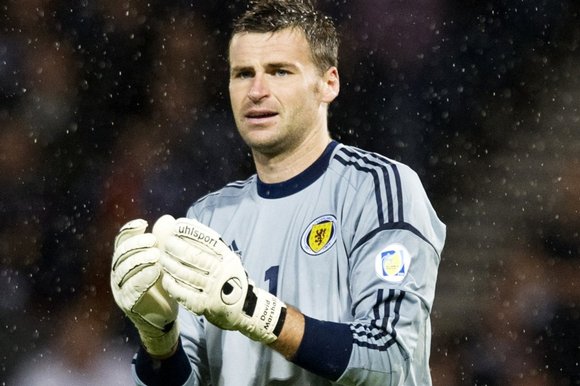
David Marshall will be 31 today. It’s slightly ironic that it has been Gordon Strachan that has promoted David as his first choice goalkeeper after all it was Gordon that demoted him as Celtic’s number one.
David had come to prominence in March 2004, as he deputised for the suspended Rab Douglas as Celtic faced Barcelona in the U.E.F.A Cup in a 4th round, second leg tie. Celtic had won the first game 1-0 previously, when David was thrust into the lion’s den that is the Bernabeu for the second leg and he gave a world class performance including a penalty save from Ronaldinho.
Soon after this Berti Vogts gave David his debut for Scotland in August 2004. Many is the player who dreams of scoring on their debut for the National team; not so much for a goalkeeper though. Like in a lot of Berti’s friendlies, Scotland were pumped; this time 3-0 by Hungary at Hampden. The third goal being a bit of personal calamity for David as a low cross was swung into the area David tried to intercept it and missed, an onrushing Steven Pressley tried to clear it and it off Marshall’s back and into the net.
By November 1st, Berti had resigned and Tommy Burns was put in temporary in charge for the next game; another disastrous friendly that Berti had pre-arranged saw Scotland lose 4-1 at Easter Road to Sweden.
The next few years would see David lose his place at Celtic as Gordon Strachan brought in Artur Boruc and he would move to Norwich initially on loan but then full time.
It would take five years before David would return and he would now be a Cardiff City player. George Burley picked him for a World Cup Qualifier against Norway in August, 2009, in Oslo. Captain Gary Caldwell was sent off in 34 minutes and by minute 35 Norway had the ball in the back of the net. This was followed by 3 more without reply; meaning David had conceded 11 goals in his first 3 internationals.
Come September and David was once more in goals to face Netherlands, although Scotland had a slim chance of reaching the play offs if they beat the Dutch it was not to be and although they had their chances a sucker punch of a goal in the 82nd minute by Elia saw Scotland fail to progress.
David had one more game under Burley at his home ground of the Cardiff City Stadium where Scotland lost 3-0 in a friendly to Wales in November, 2009.
Once more David waited in the wings with Allan McGregor wresting control of the goalkeeping spot from Craig Gordon and so another four years passed by until Gordon Strachan rescued him from the International wilderness, although he had been involved in squads from time to time. This was Gordon’s third game in charge and took place in Novi Sad in Serbia on March, 26th, 2013. Scotland lost two nil.
David would first be part of a victorious Scottish side in his 8th game as goals from Ikechi Anya and Shaun Maloney would see Scotland win 2-1 in Macedonia. However, if truth be told David went off at half time and was replaced rather ably by Matt Gilks, before any of the goals in the 2-1 victory were scored.
It wasn’t until the start of the campaign for the 2016 Euros began that David became first choice goalkeeper. At the start of the campaign, he had amassed 11 caps and by the end of it David had a haul of 22 having played in every Qualifier except the last against Gibraltar in Portugal. Overall David had performed soundly throughout Scotland’s games but with Craig Gordon and Allan McGregor in the wings he knows any below par performances could see him lose his place. Despite his recent exploits with Cardiff City in the Premiership it is a bit worrying that no one took the opportunity to sign David this season and he is still playing in England’s second flight in the meantime.
Happy Birthday, David and all the best.
(Remember to keep liking posts as Facebook doesn’t send you everything; last week there was some photos that only reached 30 people – so check out the page and catch up)

David Stuart

Kenny’s Thirty Goals

download

The other day on Denis Law’s birthday I wrote about his thirty goals for Scotland so with today being Kenny Dalglish’s birthday I thought I would do the same for him.

Goal #1. Unlike Denis it took Kenny a few games to get off the mark having made his debut under Tommy Docherty on 10th November, 1971, coming on just after half time against Belgium in a Euro Qualifier at Pittodrie; it wasn’t until his fourth game against Denmark a year later in a World Cup Qualifier he netted. Two minutes into the game at Hampden Kenny scored and Peter Lorimer added a second just after half time to seal a vital World Cup win.

Goal #2. With a minute of the game remaining Kenny scored against Northern Ireland but it was only a consolation as the Scots were two down at this point. Once more this goal was at Hampden in May 1973.

Goal#3. Came in a friendly in Frankfurt against the World Cup hosts West Germany. Kenny took a great through ball from Dundee’s Bobby Robinson and despatched the ball past Sepp Maier and into the net. Although Scotland had played well that night, again this was only a consolation goal as they lost 2-1.

Goal#4 was against Wales at Hampden on 14th May, 1974 as Scotland won 2-0 with Sandy Jardine scoring from the penalty spot also.

Goal#5 was in the last four minutes of a friendly against Norway as part of Scotland’s World Cup warm up plans. Joe Jordan had scored the other as Scotland won 2-1 in their last game before World Cup ’74.

Goal#6 Kenny failed to score at the World Cup in 1974 but scored Scotland’s third as they beat East Germany in a 3-0 friendly win at Hampden in October ’74 with Tommy Hutchison and Kenny Burns netting the others.

Goal#7 came in a 3-0 defeat of Northern Ireland at Hampden in May ’75 with Ted MacDougall and Derek Parlane grabbing the other two.

Goal#8 was in a 3-1 defeat of Denmark on Euro Qualifier business but the damage had already been done as the Scots had lost at home to Spain the year before in the group. This was in October 1975 and Bruce Rioch and Ted MacDougall scored the others.

Goal#9 was the final goal against the Irish in Home International with Archie Gemmill and Don Masson scoring as the Scots began a couple of years of great football in a 3-0 win.

Goal#10 is among our favourite of Kenny’s goals as Joe Jordan raced down the wings and passed inside to Kenny who evades the defender and then doesn’t hit the ball that well but this year the English had Ray Clemence in goal and not Peter Shilton and so the ball squirms between his legs and into the back of the net. Kenny races away with his arms aloft and with a big grin on his face and it’s 2-1 to Scotland and the British Championship was ours once more.

005089CE00000258-2838319-Kenny_Dalglish_nutmegs_Ray_Clemence_to_score_during_Scotland_s_2-50_1416273073193

Goal#11 comes in a friendly rout of Finland as Scotland win 6-0. This is the type of game Law would have scored a bundle but Kenny only netted the once with Ricoh, Masson, Eddie Gray and Andy Gray hitting a double.

Goal#12 was in Willie Ormond’s last game in charge as Scotland beat Sweden 3-1 at Hampden in April 1977. An own goal from Hellstrom and Joe Craig’s famous Scotland cameo appearance where he scored a goal, before he had even kicked the ball were the other two scorers for Scotland.

Goal#13&14 were his first double as Dalglish netted twice against Northern Ireland in the Home Internationals with Gordon McQueen scoring in between them in June 1977 at Hampden as Scotland won 3-0.

Goal#15 Wembley 1977. McQueen and Dalglish score again to do the damage as the Scots win 2-1 under Ally MacLeod. The Tartan Army then did their own wee bit of ‘damage’ afterwards.

Goal#16 came a far cry from Wembley in the Estadio Nacional, Santiago, Chile; a game which many see as Scotland’s game of shame. The stadium had been used as a prison camp following a coup d’état by the military in Chile in 1973 under Maggie Thatcher’s friend General Pinochet.
Scotland won 4-2 in this friendly as part of their World Cup acclimatisation tour of South America. Kenny opened the scoring and a Lou Macari double and an Asa Hartford goal completed the scoring.

Goal#17 was the icing on the cake as Scotland powered to a 3-1 win over Czechoslovakia in a World Cup Qualifier at Hampden with Joe Jordan and Asa Hartford bagging the others. This was Kenny’s first as a Liverpool player.

Goal#18 is another favourite as Kenny scored that wonderful header against Wales at Anfield in that unforgettable night in Liverpool in October, 1977. Argentina here we come.

Goal#19 is one that there are many images of as he managed to strike the ball beautifully from Joe Jordan’s knock down to equalise for Scotland against Netherlands in Mendoza, Argentina. The Archie Gemmill show was to follow in the second half as Scotland won 3-2 but alas . . .

Goal#20 & 21 gave Jock Stein a winning start to his second term as Scotland manager as the Scots toiled to beat Norway with an Archie Gemmill penalty in 87th minute giving them a 3-2 victory.

Goal#22 was once more against Norway in a Euro Qualifier in Oslo with Scotland winning 4-0 with gaols from Jordan, Dalglish, John Robertson and Gordon McQueen.

Goal#23 was in a drubbing of Portugal 4-1 at Hampden in the final match of the 1980 Euro Qualifiers in March, 1980. Goals from Andy Gray, Steve Archibald and Archie Gemmill completed the scoring. Scotland had of course failed to qualify but then again we did have Belgium in our group!

Goal#24 was a vital one as Scotland defeated Israel in February 1981, on their way to qualifying for Spain ’82. This match took place in Tel Aviv and would be the only home defeat for Israel in the group and went a long way in helping Scotland qualify. Footage and an article on this game was posted on the page on 26th February.

Goal#25 came in a World Cup warm-up friendly at Hampden in March 1982 as the Scots beat Netherlands 2-1 with Frank Gray providing the other.

Goal#26 and Kenny opened up our scoring in Spain ’82 in the 18th minute which was quickly followed by a double from John Wark against New Zealand in Malaga in June. Defensive frailties were apparent as Scotland lost two goals, shortly after the restart. However, late goals from John Robertson and Steve Archibald restored the three goal cushion but it wasn’t enough as Scotland would slip out of the World Cup on goal difference, once more.

Goals#27 & 28 were against Belgium in the Heysel Stadium, Brussels in a Euro Qualifier. Both goals are exquisite; the first a wonderful one two with Steve Archibald that finishes with a deft flick past the Belgian goalkeeper. The second sees Kenny weave his way through the Belgian defence before he unleashes a wonderful finish once more but this is the Scotland National team and of course it is Belgium and the Scots lost 3-2 in the end.

Goal#29 was one of six as Scotland routed Yugoslavia in a friendly at Hampden in September, 1984 winning 6-1. The other goals were scored by Davie Cooper, Graeme Souness, Paul Sturrock, Mo Johnston and Charlie Nicholas.

Goal#30 came on his 96th appearance. Scotland had been put 2-0 up against Spain at Hampden in a vital World Cup Qualifier with goals from Mo Johnston, however the Spanish had gotten one back in the 68th minute and some nervy moments followed. However, another magical moment as Kenny cuts inside from the right and seems almost to be moving away from the goals but turns and screws one into the net to give Scotland a memorable win.

Thanks Kenny for some wonderful moments. Will we ever see your likes again? Happy Birthday.

David Stuart

Standby for Action

12512450_1712629892307715_5189397931185210785_n

The other day in the George Connelly birthday piece I wrote that George was one of the players that were in Willie Ormond’s initial 40 players named for the World Cup in 1974 but had not made the final 22 but were expected to keep themselves fit.
The list is an odd mixture of players whose Scotland career was generally considered to be over, some who would become part of the squad for Argentina and some were just so leftfield that they never gained a Scottish cap at any time.
Among the players who would never be capped again were the likes of Bobby Lennox, who was last capped in 1970, Colin Stein, then of Coventry who had been last capped the year before. George Connelly also and Pat Stanton who had played for the last time a few months before the World Cup. Jocky Scott would also come into this category having last played for Scotland in 1971. Another player who rather surprisingly came into this list was the only standby player who made the full squad; Peter Cormack. Although Peter had only recently joined Liverpool and would go on to enjoy great success with them, he was never picked again for Scotland and actually won the last of his 9 caps in 1971. Jim Smith of Newcastle had been sent packing from the squad prior to the World Cup after arriving two days late for the Squad gathering for the Home Internationals and so Cormack was given his place.
There were a few players who gain a few more caps, mainly around 1975 as Willie rebuilt the team, these included Derek Parlane of Rangers, Bobby Robinson of Dundee, Wolves’ Frank Munro and goalkeeper Jim Brown who would win his only cap in Bucharest the following summer as Scotland drew 1-1 with Romania in a Euro Qualifier.
Several players would be part of the 1978 World Cup Squad and some like Archie Gemmill and Graeme Souness would become Scotland legends. Derek Johnstone, Lou Macari and Kenny Burns, then of Birmingham City would all travel to Argentina.
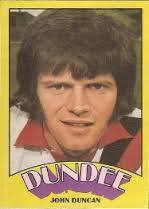
Leaving us with the final three who would never actually play for Scotland. John Duncan was a big strong striker who was at Dundee at the time and had been on the periphery of Scotland teams over the last few years without being capped. After Dundee he would go to Tottenham where he would play 103 League scoring a respectable 53 goals. John became famous, years later for taking Chesterfield to FA Cup semi-finals in 1997 losing out in a replay to Middlesbrough.

12814176_1712629928974378_6309466258339207790_n
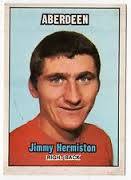
Defender Jim Hermiston of Aberdeen was also included and this would be as close to the Scotland team as he got and indeed he would quit football shortly after to become a police officer.

12806102_1712629972307707_5523734071020626738_n
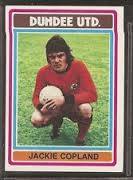
Finally, the other perhaps strange one would be Jackie Copland of Dundee United but like Hermiston, Jackie had represented Scotland in a Scottish League XI in March of ’74 where they had lost 5-0 to England at Maine Road. Jackie would go on to play for St. Mirren and like a lot of these players would be very familiar to Scottish card collectors for years.

David Stuart

Hail Caesar!

943984_1712417548995616_6722497582056273299_n

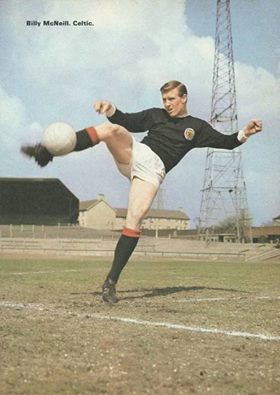
Happy Birthday to Billy McNeill who will be 76 today. Without doubt Billy ranks among the greats of Scottish football but he would only gain 29 caps and towards the end of the sixties would often be regarded as second choice to Rangers’ Ronnie McKinnon.
Billy probably had the worst start of any centre half for Scotland as he would play in a defence that would let in a total of 16 goals in his first six caps.
Billy’s first game was on 15th April, 1961 at Wembley. England would win 9-3. Billy retained his place in defence as would fellow debutant Rangers’ Bobby Shearer for the World Cup Qualifier double header against the Republic of Ireland. Billy would start these games in May, with fellow Celt Pat Crerand playing alongside him. Scotland won 4-1 at Hampden and followed it up four days later with a 3-0 win in Dublin.
These games were followed a week later with a 4-0 defeat to Group rivals Czechoslovakia in Bratislava.
Season 1961-’62 saw Scotland host Czechoslovakia at Hampden in September. Scotland would go behind twice but Denis Law grabbed two late goals to give Scotland a 3-2 win and set up a play-off. However, next up was a Home International against Northern Ireland in Belfast in early October. Scotland won 6-1 with three Rangers players scoring; Alex Scott hitting a hat-trick, Ralph Brand a brace and Davie Wilson a solitary goal.
Billy would miss the next two games and it would be an injury ravaged Scotland that would lose 4-2 to the Czechs in Belgium after extra time.
McNeill would return for the chance to gain revenge on England in April 1963 and was part of the team that won 2-0 at Hampden with goals from Davie Wilson and Eric Caldow to win the British Championship.
A couple of weeks later and defeat in rather bruising encounter with Uruguay (is there any other?) at Hampden, that Scotland lost 3-2 to finish the ’62-‘63 season.
Ian Ure had replaced Billy in his two game absence in late ’62 and was now given a run out in the team by Ian McColl and so Billy was on the side-lines for the next year until a friendly in June ’63 against the Republic of Ireland that saw Scotland lose one nil and Billy subsequently dropped for the next game; a 6-2 drubbing of Spain in Madrid.
Again Ure became first choice Centre Half until November ’63 when Billy was brought back in to play against Wales in a 2-1 win at Hampden with John White and Denis Law scoring for the Scots. Once more Billy was to taste victory against England at Hampden in April ’64, as Alan Gilzean’s solitary goal spilt the teams. This would be a special occasion for Billy as this was the first of 8 games that he would captain the team. Gilzean would provide a brace as the Scots played a 2-2 draw with West Germany in Hanover to finish off the season.
Injury would see him out of the team until April ’65 and a 2-2 draw with England at Wembley, was quickly followed by a blank score friendly draw at Hampden with Spain. Then came two away World Cup Qualifiers with Jock Stein now in charge. The first saw Scotland grab a vital point in Chorzow, Poland with Denis Law netting the Scots goal. Four days later a 2-1 win in Helsinki saw them complete a brace of wins over Finland with goals from Davie Wilson and John Greig.
A 3-2 defeat to Northern Ireland in October was followed with a disastrous last six minutes against Poland at Hampden where the Scots lost two goals after Billy had given them a great start by netting in the 14th minute. An amazing 107,580 attended that game and 100, 393 would witness Scotland beat Italy 1-0 with a goal in the 88th minute a month later. However, Billy did not play in this game and would not feature again under Jock Stein as Scotland manager as Ronnie McKinnon had made his debut that and retained his place more or less for the next few years.
Managers, Prentice and McDonald came and went without picking Billy and he was also absent for the famous ’67 win at Wembley under Bobby Brown but did play in a friendly against the US.S.R. in May that Scotland lost two nil. February 1968 saw him line up alongside McKinnon against England at Hampden in a game that finished 1-1 and saw Scotland lose out in a place for the ’68 Euro finals.
Billy played his next game and scored his second Scotland goal in a Home International down at the Racecourse as the Scots defeated Wales 5-3. A week later on May 10th, Billy once again faced the Auld Enemy but a decent Scotland team were spanked 4-1 at Wembley. Billy did retain his place a week later as the Scots ran riot against Cyprus winning 8-0 at Hampden with Coin Stein netting four goals and Billy also getting among the goals early on too.
McKinnon and McNeill were once more brought together for the vital World Cup Qualifier against West Germany in Hamburg in October ’69. Despite a valiant effort the Scots were to lose 3-2 and say goodbye to their dreams of Mexico ’70.
Billy must have thought for the next few years, that his time with Scotland was over until he had a bit of a renaissance under Tommy Docherty and played in all three games of the 1972 Home International Championship. Two decent wins against Northern Ireland and Wales at Hampden winning 2-0 and 1-0 respectively, saw Scotland with a chance to win the Championship outright. However, in a rather bruising encounter the Scots lost one nil to an Alan Ball goal. England had already lost to Northern Ireland at Wembley and so this Championship was shared between the Scots and English.
And so that was it for Billy and Scotland as a player although he did play for Celtic for a few more years and then move into a managerial career. Billy would however carve out a wee niche for a few years as a co-commentator on many a Scotland match with the BBC.
Billy hasn’t been in the best of health of late and we at the Epistles wish him all the best for the coming year. One final thought, Billy is just one of a few statues that grace Celtic park in memory of his great service but when will we see the likes at Hampden to one of our golden heroes?

David Stuart

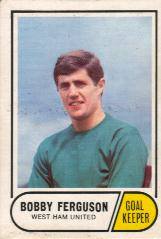
Happy Birthday to Bobby Ferguson

10419424_1712105169026854_944767278819350121_n

Bobby Ferguson will be 71 today. If, in football like life, timing is everything perhaps Bobby in his Kilmarnock days had it in spades. In season 1964’-65, Kilmarnock and Scotland goalkeeper Campbell Forsyth was injured in the last few weeks of the season and it was Ferguson that stepped into his shoes. Now, had this been any other season it would perhaps not be as remarkable however, Kilmarnock were to win the Scottish First Division on the very last day, winning the Championship for the one and only time.
November, 1965 saw Ferguson fit into Forsyth’s International shoes too under Jock Stein. Bobby played in the Home International against Wales. Scotland won 4-1 with two goals from Bobby Murdoch and one a piece from Willie Henderson and John Greig. Also making their debuts that night were Dundee’s Charlie Cooke and Jim Forrest of Rangers.
Scotland’s next game was the vital World Cup match against Italy in the World Cup qualifiers in Naples. Jock chose to go with Burnley’s Adam Blacklaw but the Scots lost out 3-0 and ultimately lost out in a World Cup place too.
John Prentice would choose Ferguson as goalkeeper for his first game in charge which was the 3-4 match against England at Hampden in April, 1966 that I posted on the Facebook page on Sunday. John would only manage Scotland for four games before taking up the managerial post at Dundee. Bobby played in all four as Scotland lost 3-0 to the Netherlands at Hampden with a side that contained only home based players in early May, followed by a narrow 1-0 defeat at home to a Portugal side that would light up the World Cup in late June. The Portuguese side won through a goal by Torres and playing alongside him that day was the great Eusebio. A week later and Pele would grace Hampden for the one and only time on June 25th, 1966, Scotland would go into an early lead through Stevie Chalmers in the first minute but Servilio would equalise quarter of an hour later and that is how it remained.
October, 1966 would then see Kilmarnock manager Malky MacDonald in charge of Scotland in a caretaker role and he, not too surprisingly would continue with Ferguson in goal for the Home International against Wales, (which I also posted on Sunday) that doubled up as a Euro Qualifier. Scotland were to draw one each and this was quickly followed with a 2-1 win over Northern Ireland at home with Murdoch and Bobby Lennox scoring the goals.
Bobby Brown then took charge of Scotland and went with Ronnie Simpson for Scotland’s next game, the famous 3-2 win over England at Wembley, so perhaps Bobby’s timing didn’t hold out for that one. He did, however, move to West Ham the following season for what was then a World Record fee for a goalkeeper of £65,000 and would play for the Hammers over 250 times before losing his place to the great Phil Parkes.
Bobby would then move to Australia and become involved in coaching but more bizarrely ran a diving firm which he gave up shortly after a colleague was killed by a shark, probably a wise move.
So Happy Birthday, Bobby and all the best.

David Stuart

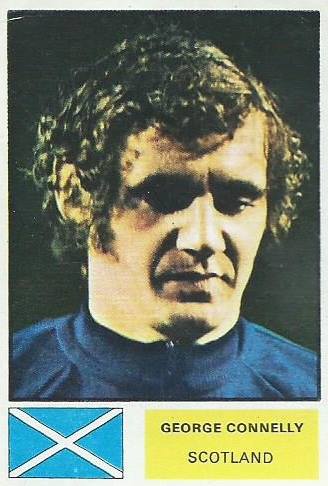
Happy Birthday George Connelly

12512453_1712095272361177_5896529111062461653_n

George Connelly, will be 67 today. George only ever played in two games for Scotland and yet made his debut in perhaps one of Scotland’s most memorable footballing nights. It would be fair to say that down Parkhead way, George will be remembered with an admiration tinged with a forlorn sadness about what might have been.
George, it seemed had an abundance of talent but also had his issues including depression that affected him at the height of his fame. In these more enlightened times George might have been able to talk more about his issues and be helped to work through them more openly. However, football can still be a cruel environment in which to show any signs of mental health issues, so who knows how things would have turned out. As it was Celtic and Jock Stein tried to give George as much support as they could but it was not enough to see him through his troubled times.
Willie Ormond was also supportive of George and picked George for Scotland to travel to Switzerland in June, 1973. George who had just won the Scottish Writers Player of the Year award for season 1972- ’73 was overcome with anxiety at Glasgow Airport and left before the team boarded the plane.
Ormond would give George another chance three months later in what would be Scotland’s most important game for years. Willie must have held George in such high regards as he thrust him into the team to face Czechoslovakia in September, 1973. George was not the only debutant that night as Ormond also chose to start with Coventry’s Tommy Hutchison.
As we all know Scotland won the game 2-1 and history was made as we returned to the World Cup Finals for the first time in 16 years.
Although, George would miss the next game, come November he played in the friendly at Hampden against World Cup Hosts West Germany. Scotland were to go into the lead in 7 minutes through Big Jim Holton but Uli Hoeness would equalise in the 80th minute to deny Scotland the win.

12805645_1712095315694506_2728429816732417359_n
George would bail out again on his club side over the next few months and although he would be back in the Celtic side by the end of the season, Willie left him out the 22 for the finals although he was one of the 18 players who were on Standby should they be needed. It was not to be and George never graced the dark blue of Scotland again.
Happy Birthday George and I hope this year finds you well.

David Stuart

Scotland’s First Under-21 Team

A way back in the mid-70’s UEFA decided to go with a more Youth centred structure and scrapped the idea of Under-23 games. Scotland’s last Under 23 game was played in March, 24th, 1976 against Netherlands.

However, this is all about the first Under-21 game and when you look down the list there are some impressive names in there but there are also a couple of obscure players in there too.
The first game was also a European Championship match played against Czechoslovakia in Pilsen. Andy Roxburgh had been made the SFA Director of Coaching in 1975 and it was he would take charge of the Under-21 team
In goals was a not very youthful Bobby Clark of Aberdeen. Bobby was obviously one of the overage players. Bobby had gained 17 full caps by this stage and although he wouldn’t play again for the first team, he did travel to Argentina as part of Ally Macleod’s squad. He would play three times for Under-21 team.
In defence there was full back pairing of George Burley of Ipswich and Manchester United’s Arthur Albiston. Both would be capped at Full International level with Burley gaining 11 caps and Albiston 14 but would never play in the same team with the majority of Arthur’s cap coming after Burley’s International playing career was finished.
Pat Stanton was the other old head in this one; the Hibernian legend lining up for the Under-21’s at the age of 32 but not as a Hibs player but as a Celt. Pat had gained 16 full caps in total. Most likely playing alongside him was Celtic’s Roy Aitken, Roy, would of course go on to win 57 caps and captain Scotland 27 times.
I have said most likely as there was one David Narey playing in the team that day too. Narey of Dundee United would go on to win 35 caps and of course, score a wonderful goal against Brazil in the process. It is more likely Narey was in the midfield alongside some very, very talented players; Davie Cooper, Tommy Burns and John Wark.
Cooper was being capped as a Clydebank player and although my first thought, was would be perhaps he was the only one; there were others. John Henry, Sean Sweeney and Gary Teale were all capped at Under-21 level as Bankies. Of course, Cooper would go on to be a legend and played 22 times for Scotland scoring that vital penalty at Ninian Park, Cardiff to send Scotland to the World Cup play-off against Australia. He furthered Scotland’s push to Mexico ’86 by scoring a wonderful free kick against the Aussies at Hampden as Scotland struggled against a stubborn Australian defence.
Tommy Burns of Celtic is perhaps another player who should’ve won more caps for Scotland but there was a wealth of talent around that time, playing at the top of the English League but 8 caps were all he would earn.
Finally, in the midfield was John Wark, a legend at Ipswich, not so much at Liverpool but definitely in Hollywood, where his performance in ‘Escape To Victory’ has been seen as influential in the work of DiCaprio, Depp and others. John would win 29 caps scoring 7 goals in total including two against New Zealand in the 1982 World Cup.
Up front was the sprightly Paul Sturrock of Dundee United. Sturrock would also represent the full side 20 times scoring 3 goals.
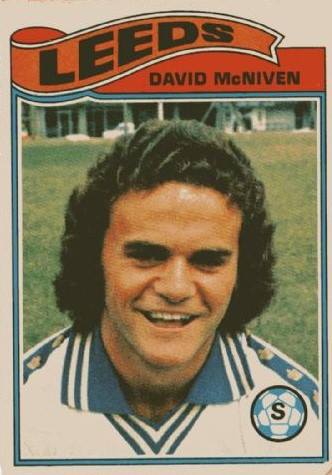
Then we come to one of our more obscure players; David McNiven of Leeds United. McNiven would play three times for the Under-21 team and would score against Wales in a 3-2 victory. David struggled to get into a Leeds United team full of stars such as Joe Jordan and Allan Clarke, however he did play 23 League games for Leeds scoring six goals in the process. His desire to play regular first team football saw him move to Bradford City, where in a five year period from ’78 to ’83 he would play 212 games scoring 64 games before moving on to Blackpool and then Halifax Town. There was one consolation for David; he did get to appear in a set of football cards; the Topps English set of 1978/79.

12718251_1710946962476008_400355281063783679_n
McNiven would be replaced by Kilmarnock’s Davie Provan who of course would go to play for Celtic and win ten caps for Scotland scoring one goal, in a 3-1 win over Israel at Hampden in a 1982 World Cup Qualifier.

11694936_1710947015809336_4546643371132295820_n
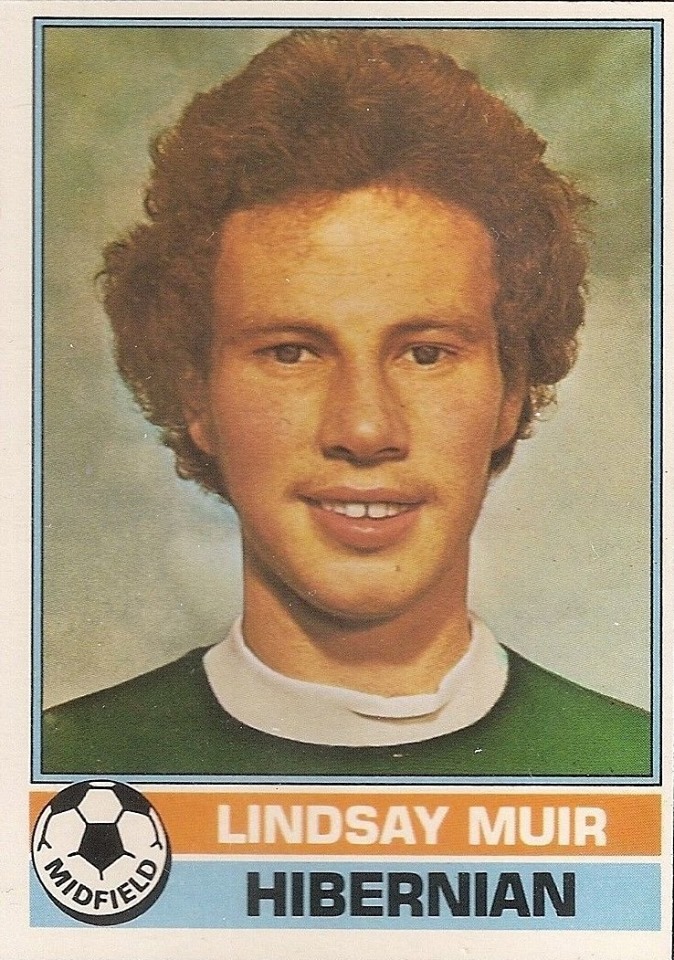
Lastly, there’s Lindsay Muir of Hibs, who would replace Narey during the game. Lindsay would only ever play 18 league games for Hibs before moving to St. Johnstone, then to Berwick Rangers whom he would play 220 League games for in his first time there and then a further 44 after a stint at Cowdenbeath in between. Remarkably like McNiven he too would be immortalised in a set of football cards; the 1977/78 Scottish set.
So with all this wealth of talent on show; how many goals did this Scotland team score? None . . but then again neither did the Czechs.
(Thank you to The Fitba’ Stats website for their help in compiling this article and also keep remembering to like our stuff to ensure Facebook keeps sending it to you.)

David Stuart

Scotland v Israel 1981

12745662_1710759905828047_3950314075721399706_n

35 years ago Scotland ventured into unknown territory playing Israel for the first time. It was a World Cup Qualifier and took place in the Ramat Gan Stadion in Tel Aviv. It’s fair to say that Israel’s footballing history has not been an easy one as they have had to contend with boycotts and conflict from their neighbouring nations. They did qualify for the 1958 World Cup from the Asian and African section by virtue of no one being willing to play them. A play off with Wales was deemed necessary in the interests of fair play which saw the Welsh qualify for Sweden 1958.
Thy would reach the World Cup in 1970 via the Asia / Oceania group but for the 1982 World Cup they were placed among the European teams but were not UEFA members at this point. Scotland had started the campaign with a fine win in Sweden with Gordon Strachan scoring the only goal of the game; this was followed by a blank score draw with Portugal at Hampden.
By the time Scotland travelled to Israel on February 2nd, 1981, Israel had proved themselves sturdy opponents; having started with a draw with Northern Ireland in Tel Aviv and two draws with Sweden home and away. However, they had been well beaten in Lisbon where Portugal ran out 3-0 winners.
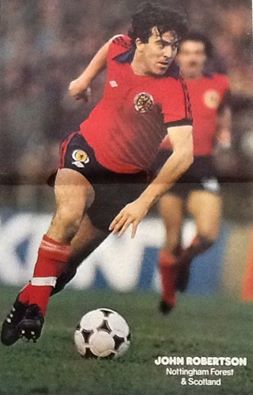
Scotland lined up with a fairly experienced side under Jock Stein. In goals was Alan Rough with full backs Danny McGrain and Frank Gray, then of Nottingham Forest with teammate Kenny Burns and Alex McLeish making up the defence. In midfield there was John Wark of Ipswich, Graeme Souness, John Robertson and captain Archie Gemmill, who had recently left Forest for Birmingham City. Up front was Kenny Dalglish and Steve Archibald then of Tottenham Hotspur. This is also the only time Scotland wore the red socks with the red away top as you can see splendidly modelled by John Robertson in the photo.
The sides were level at half time but according to Hugh Taylor of the Evening Times they were lucky not to go in 2-0 down at half time and that Alan Rough had his most professional performance for Scotland ever. Apparently the half time team talk was a bit of a bawling out by Jock as the team had been a ‘shambles’ in the first half. John Wark was carrying a hamstring injury so Stein chose to bring on Willie Miller and push Kenny Burns forward to bolster the midfield.
This must have worked as in 54th minute a John Robertson corner is knocked on by Alex McLeish and Kenny Dalglish finishes with some aplomb. The goal will also be posted on our Facebook page shortly. 1-0; time to batten the hatches and escape from Tel Aviv with the points. Dalglish was substituted fifteen minutes later with Andy Gray then of Wolves coming on but the Scots held on for a vital win. Scotland would be the only team to take both points in Tel Aviv with Portugal suffering a 4-1 humbling in October ’81 and indeed they beat Israel 3-1 a few months later at Hampden.
Scotland won the group with two points to spare and had qualified before their only defeat in the group to Portugal in Lisbon. Northern Ireland would surface as runners up and also qualified for Spain ’82, where the caused one or two upsets particularly in beating the host nation in a famous 1-0 win. As for Scotland . . .

(Just remember Facebook doesn’t always send you our stuff so please like our articles to ensure you continue to get our posts and photos sent to you).

David Stuart

MacChester United

12745790_1710295742541130_3918821133636286546_n

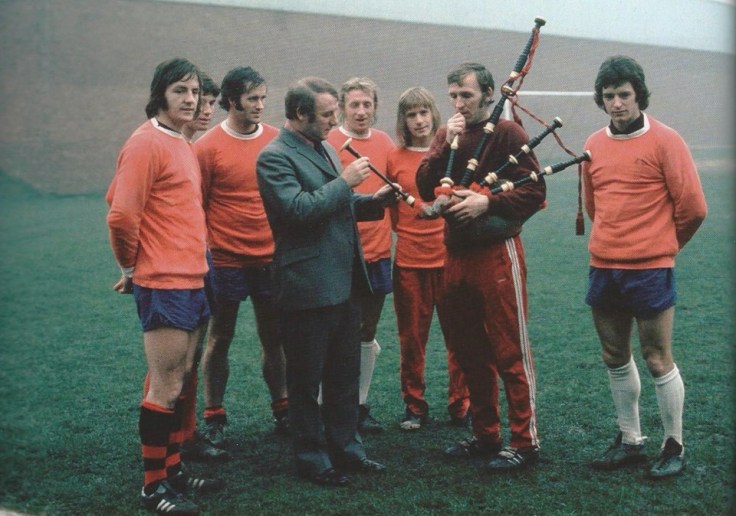
No doubt some newspaper used that title after the taking of this contrived photo of Tommy Docherty and his Merry Band of “Scotchmen”.
This photo is taken from the Denis Law book ‘My LIfe in Football’, which I held back from yesterday.
The line-up is Tommy Docherty with his assistant manager Pat Crerand mucking about with the bagpipes and then going from left to right. It’s Alex Forsyth, Martin Buchan, George Graham, Denis Law, John Fitzpatrick and finally Willie Morgan. Including Docherty and Crerand they have an impressive cap count of 173.
John Fitzpatrick was the only uncapped player and generally throughout United’s glory years of the late 60’s he was a bit part player but he still racked up almost 150 games for the Red Devils. He would be familiar to card collectors from the early 70’s as he always seemed to turn up in the Scottish A&BC sets. However, John retired early from football due to arthritis at the age of 26.
Scots would come and go at Old Trafford under the Doc and you do wonder if some like Lou Macari and Jim Holton ducked out of this photo session or was this before their time. Ted MacDougall probably had already left at this point but the likes of Joe Jordan, Gordon McQueen and Stewart Houston would appear quite soon and coming through the ranks would also be Arthur Albiston.
Sadly, nowadays there are very few Scots at Old Trafford never mind in the rest of the EPL, however young defender and Scotland under -21 Donald Love made his first appearance a couple of weeks ago; so maybe there’s hope yet.
Finally I leave you with the wise words of Pat Crerand as quoted from the book; “You tell me any sensible person who knows one end of the bagpipes from another! Tommy Docherty could have played them okay, because he was always full of wind. If he told me it was sunny outside, I’d go out and check the weather.”

David Stuart

Blog at WordPress.com.

Up ↑