So the fashion photos have been up for seven hours and no likes. I get the feeling too many of you guys really wanted to like them but would be worried if you were seen to like the bare chested Souness or Nicholas photos.
Okay so Simon Le Don, is more East 17 than Duran Duran in this one but sometimes it’s hard to come up with e new title for each little article. It’s funny, as I almost didn’t want to include this one from Dodgy Football Fashions as I instantly dismissed Simon as a Scotland player. Under -21’s no doubt but full caps? Nah, don’t remember that and yet Simon gained ten caps altogether and was even included in 1998 World Cup Squad.
Similar to Jamie Forrest, Simon actually played against ten different teams altogether but here’s the thing; for caps 1-9 he played 129 minutes of football, then in cap ten he played the whole game and then he was gone.
Here’s breakdown of his games, most of which were friendlies. First cap was against Wales in 27th May, 1997, came on for 10 minutes, v Malta 6 mins, v Latvia (WCQ) 6 mins, v France 7 mins, v Denmark 16 mins, v Finland 14 mins, v Colombia 29 mins, v USA 8 mins, v Estonia (ECQ) 33 mins and finally against the Faroes (ECQ) the full 90 minutes.
So there you go, the short Scotland career of Simon Donnelly. I can’t help but wondering is there someone out there who has played 11 times against 11 different opponents. Mind you, I don’t want to think on it too much as that’s the kind of stuff that keeps you researching into the wee wee hours.
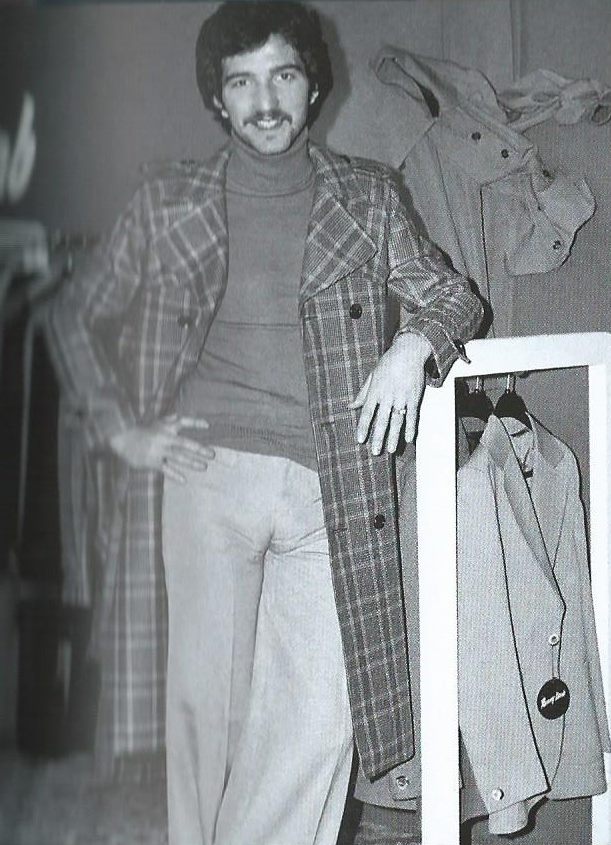
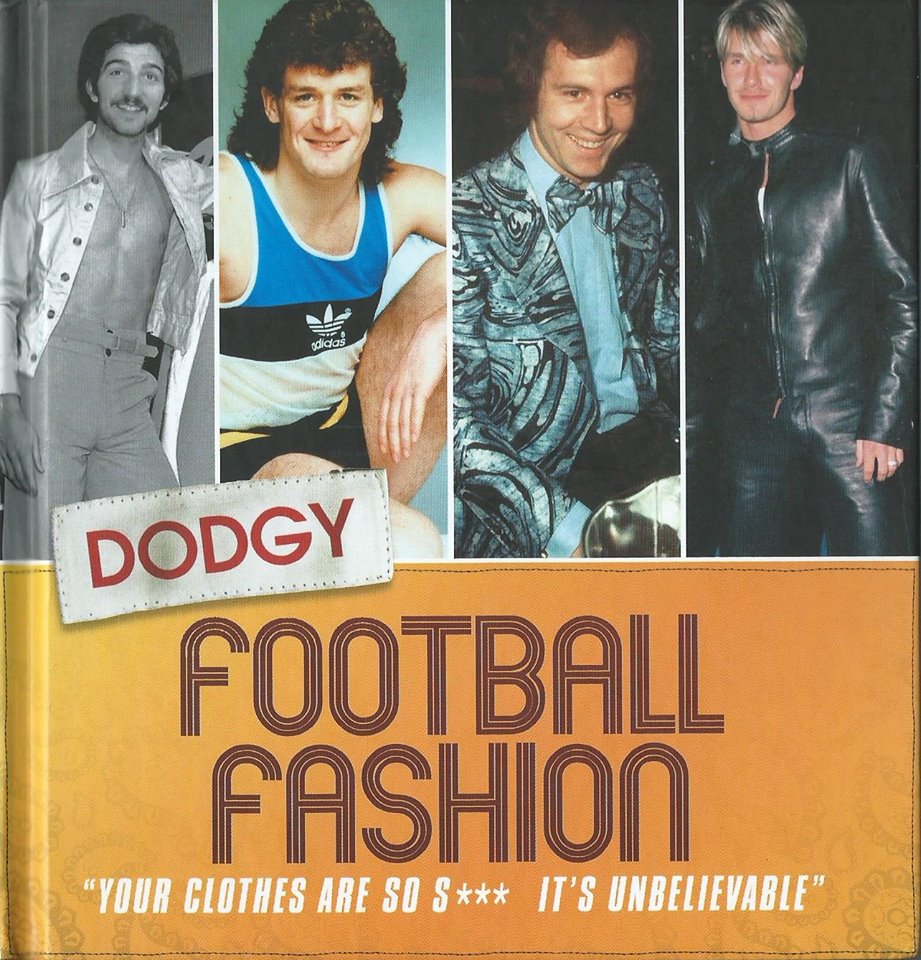
Yep, it’s that time again when I show the latest book what I have purchased from a charity shop and for a mere 50p this gem was mine. There’s many a fashion faux pas in this book, “Dodgy Football Fashion”. It came out about five years ago and some of you may have got it for Christmas that year. There’s plenty of photos of Scotland’s brightest and best and we will be posting some of them over the next few days. Here’s the cover and of course Champagne Charlie. (Yes, that is Souness on the front).
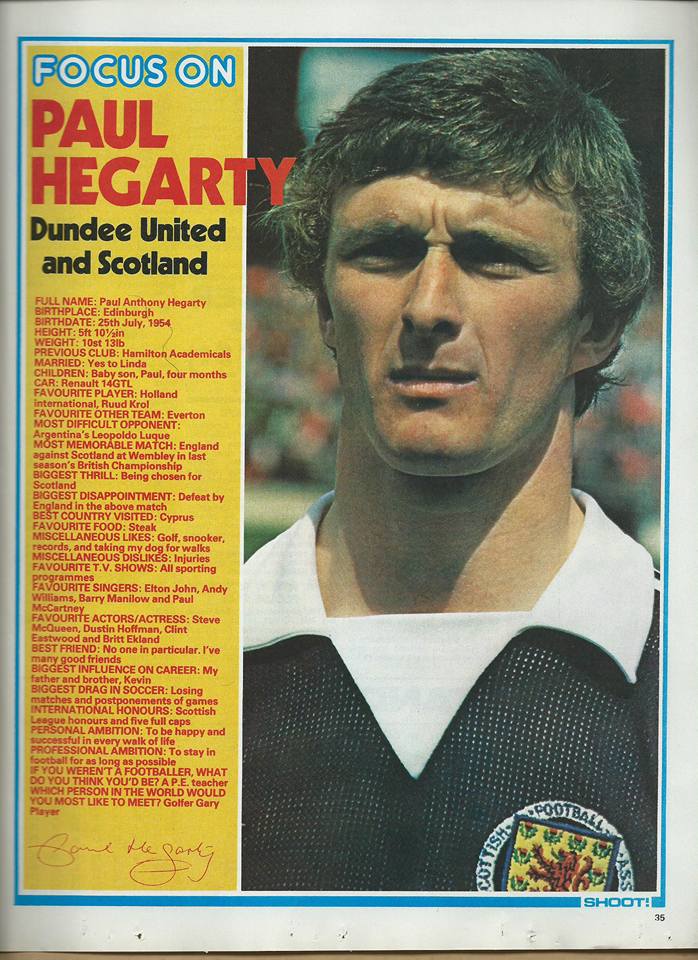
Yep, it’s another of those in depth Shoot interviews where we find out a bit about a players hopes, dreams, ambitions and philosophies of life but mostly some trivia. This time it’s Paul Hegarty of Dundee United. It’s fair to say that Paul didn’t have the greatest of Scotland careers, playing a total of eight games and losing four of those including two defeats to England. However, it would also be fair to say that the start of Jock Stein’s reign as Scotland manager was pretty poor too and perhaps had it been a lesser person he may well have been given the heave – ho.
Paul’s first cap came on May 19th, 1979 against Wales in Cardiff. There were quite a few players making their debut that day too. George Burley and John Wark of Ipswich as well as Liverpool’s Alan Hansen started that day. It be fair to say that only Wark is probably remembered all that fondly by Scotland supporters.
It was an ex- Liverpool player who made the most impact that day though, as John Toshack scored a hat-trick in a 3-0 thumping.
With Hansen dropped Paul, lined up alongside Gordon McQueen for the midweek game against Northern Ireland with Arthur Graham scoring the only goal to give the Scots victory at Hampden. On the following Saturday, this defensive line-up was retained but 100,000 people crammed into Wembley saw the Scots go down 3-1 despite taking an early lead through Wark.
A week later and it’s Argentina with a young Maradona’s turn to put three past Scotland, Hegarty is paired with Hansen and Dundee United teammate David Narey was also given a starting berth. Arthur Graham scores a late consolation but the day is all about Maradona.
Hegarty makes a sub appearance at half time in our next game five days later a Euro Qualifier against Norway in Oslo, which the Scots coasted 4 nil.
It’s not ‘til the following years’ Home Internationals that Hegarty is chosen again, lining up versus Wales at Hampden. Aberdeen’s Willie Miller and Alex McLeish are also in the line-up with Miller given a more forward role that enabled him to score the only goal and indeed his only goal for Scotland as we all know. Come the Saturday and things don’t work out so well for Hegarty and Scotland as they go down 2-0 to England at Hampden. Fast forward three years to Paul’s final cap in which three other Dundee United players are playing. It’s against Northern Ireland on May 24th, 1983 and Scotland play out a dull nil nil draw. Incidentally the only Aberdeen player on show at the start of the game, is Neil Simpson making his debut; it’s not surprising as they have won the Scottish Cup three days prior and the European Cup Winners Cup only a fortnight before. On this last occasion Paul was made captain of the team.
So for Paul, that was it on the International front.Now to focus on his focus on. His favourite player is Ruud Krol of Holland, most difficult opponent was not Maradona but teammate Leopoldo Luque. Most memorable match is the game at Wembley to England, Biggest Disappointment – getting beat the aforementioned match.
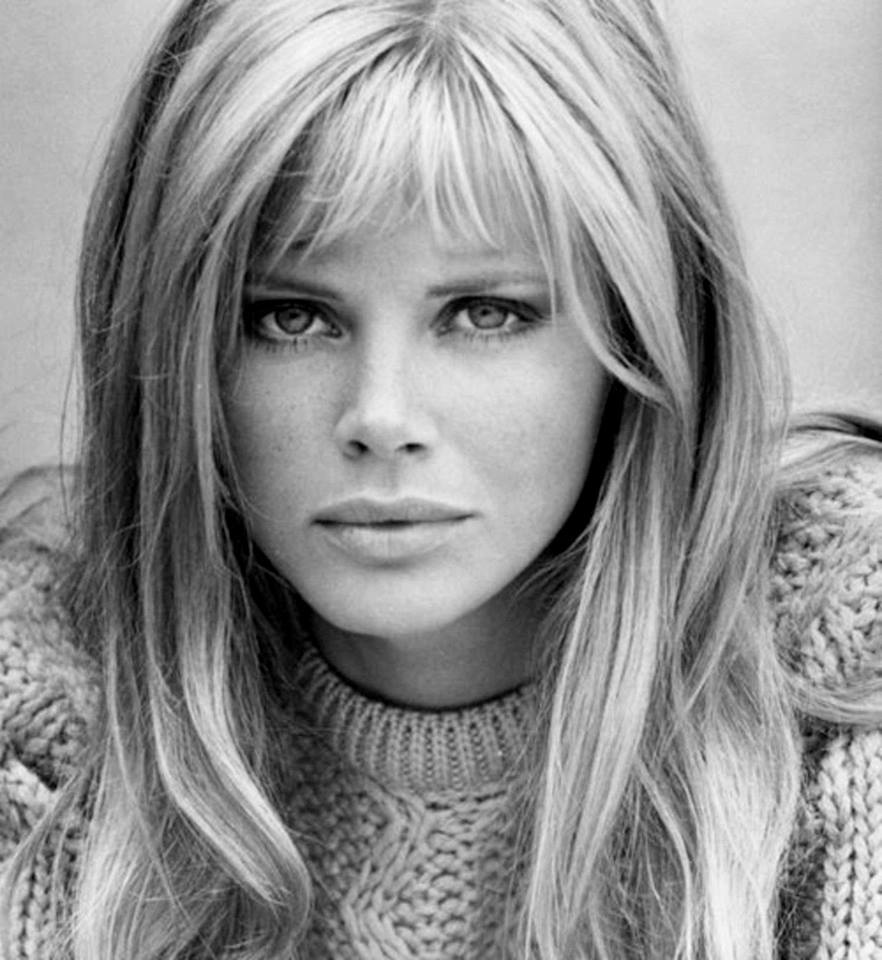
Quelle Surprise his favourite food is Steak! Among his singers Andy Williams and eh . . . Barry Manilow (my God man what were you thinking). Favourite Actors / Actress – Steve McQueen, Dustin Hoffman, Clint Eastwood and (Whoo-hoo Photo time) Britt Ekland. At first I thought a strange choice but she was in some cult films; Get Carter, Wicker Man and of course the Man with the Golden Gun.
Finally, it was good to see someone whose professional ambition has been realised as Paul wanted to stay in Football for as long as possible and given that he has recently signed a two year contract as manager of Montrose I would say he is doing pretty well by my reckoning. Well done Paul.
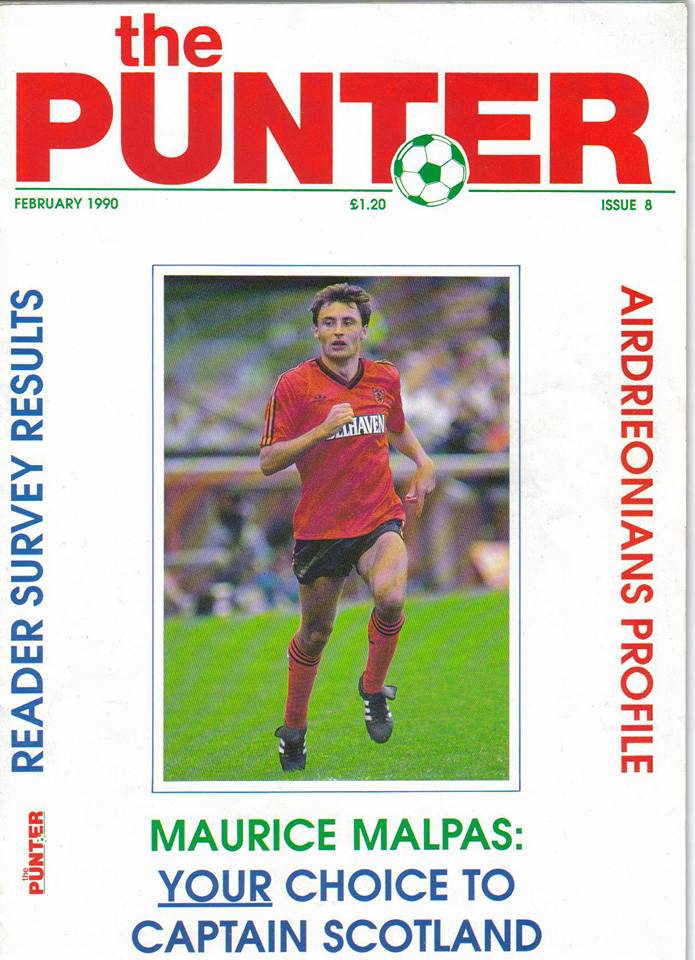
Another ‘Dragonfly’ Scottish Football magazine was ‘The Punter’ from Scotrun Publications Ltd of Kelvingrove Street, Glasgow. The first issue came out in 1989 and cost £1.00 for 48 pages. The following year the cover price increased to £1.30 .
First and foremost, ‘The Punter’ championed the research of former Wing Commander Charles Reep and his ‘Performance Analysis’ which suggested that the route to success lies in simple, direct football. ‘The Punter’ then argued that if a team like Wimbledon can win the F.A. Cup then Scotland could win the World Cup and as such there was no better time to throw off the self-imposed shackles of possession football and utilise Reep’s research in harness with the Scottish strengths of fast football and determined tackling.
I can only assume that Reep’s research was never translated into Spanish or Catalan and so moving along, the attached two covers are from the January and February 1990 issues.The January issue reflects on the world cup draw [ie the draw for the FINALS] and concludes that Scotland being alongside Brazil, Sweden and Costa Rica are in a glamour group whilst the Republic of Ireland with England, Netherlands and Egypt form the Group of Death. As it transpired it was the Egyptians, the Swedes and the Scots who ended up mummified.The February issue publishes the results of a readers survey which made for interesting, er reading. Apparently 54% of respondents wanted Hampden replaced as opposed to upgraded with the favoured choice of location being somewhere in the Stirling area. Dundee United’s Maurice Malpas was the readers’ choice for Scotland captain with 30% of the vote. Alex McLeish and Richard Gough both polled 17% whilst Willie Miller was next with 16%. The beleaguered incumbent- Roy Aitken- got the backing of only 5%.
Maurice Malpas won a total of 55 caps between 1984 and 1992 but would captain his country only twice [cap no.39 – away to Bulgaria in November 1990 and cap no.50 – away to Norway in June 1992]. For the record, Aitken was captain on 27 occasions, Miller 11, McLeish and Gough 8 each.
Overall, George Young leads the way with 48 ‘captaincies’ then comes Billy Bremner on 39 followed by Gary McAllister on 32 and Barry Ferguson with 28. Almost forgot- Graeme Souness was the captain of our ship 27 times. Of the current squad, Darren Fletcher leads Scott Brown 24 -16. Oh yes, and WGS got the job 5 times…..
I recently made a return visit to Area 51 [aka the back of my garage] to go in search of those ‘dragonflies’ of the literary world – magazines dedicated to football in Scotland.
First out the C&A poly bag was the June 1990 edition of ‘Scottish Football Today’ [a scan of page 17 is attached]. SFT was published by Business Information Publications of Woodlands Terrace, Glasgow on a monthly basis and cost £1.30 for 52 pages.The June 90 edition was an Italy World Cup Finals special with articles on our very own Gok Wan [ie manager Andy Roxburgh]; an interview with our Assistant Manager – the shy, retiring Craig Brown; plus a look at possible squad members with ‘unsuccessful nominations’ of Stuart Munro, Steve Nicol, Brian McClair, Pat Nevin and Hearts’ John Robertson all being touted. Personally speaking, I would have included Robbo and Nevin before Rambo and Fleck but then again, for me a trip to Largs meant an ice-cream at Nardini’s not an SFA coaching course.
Back to the mag and I was also able to gorge myself on features on Italian football, host venues, other finalists plus Scotland’s route to the finals which ended with a nervy game against Norway at Hampden in November 1989. Needing just one point to qualify, Scotland took the lead just before half-time when Ally McCoist lobbed the ball over the Norwegian keeper following a superb headed pass from Maurice Malpas. Norway equalised however in the 89th minute with a 35 yard shot which Leighton misjudged completely. 64,000 Scotland supporters then knelt in prayer…..
Both the July and August editions of SFT review the World Cup Finals – the article on the Scotland-Costa Rica game includes words such as debacle,shame, indignity and humiliated. Fanzines were able to tell it like it really was – We fucked-up big style!
I don’t know if ‘Scottish Football Today’ continued in existence so as to cover Scotland at the 1992 European Championship Finals but if Scotland make it to Euro 2016 then I would hope that special one-off magazines will appear that are dedicated to Scotland’s pursuit of the Delauney trophy – ‘When Gordon meets Henri’ – non? OK then, but I wouldn’t want to rely on ‘British Publications’ which are likely to include token spotlights on Wales, Northern Ireland and ourselves. [Yes I know I’m getting carried away again, but being an optimist is much more fun than being a realist].
Needless to say, if you are looking for an irreverent, prejudiced, parochial and non pc slant on the Euros then you can always rely on your friends at Scotland Epistles.
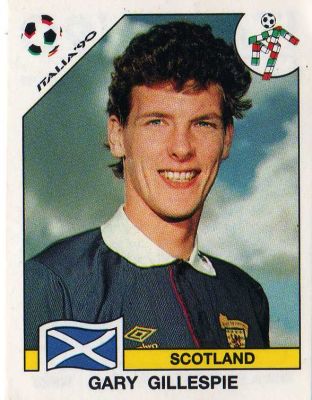
Gary Gillespie will be 55 on July 5th. Gary’s is one of those players who at an early age seemed to be destined for great things but his Scotland career only amounted to thirteen caps and as a bit part player, generally playing when others were injured or unavailable.
And yet his career started well; at seventeen Gary was given the captaincy of Falkirk, by eighteen he was on the move to Coventry City. His first Under -21 cap came a few months after his eighteenth birthday in a friendly against USA at Pittodrie on October 17th, 1978. Andy Roxburgh was in charge of the team at this point and it would be him that would give Gary all his full caps too. Also in the team that day were future Scotland players Alex McLeish, Murdo MacLeod and Eamonn Bannon. The team won three – nil with goals from Murdo, Neil Orr of Morton and Partick Thistle’s Jim Melrose.
By the time of his first team cap at the age of 27 on October 14th 1987, Alex McLeish was on cap 48, Eamonn Bannon’s 11 cap career was over and Murdo MacLeod had gained 5 of his eventual 20 caps. Gary was paired alongside McLeish on that night against Belgium in a Euro Qualifier at Hampden, which the Scots won 2-0 with goals from McCoist and McStay.
Gary, by this time was a Liverpool player having probably spent too many years at Coventry, that possibly hindered his International progress. Gary would also play in the following game, a Euro qualifying match, as Scotland beat Bulgaria in Sofia with Gary MacKay scoring that famous goal that put ROI through to their first Finals.
Gary played in a goalless friendly against Spain in April the following year but with competition from McLeish, Miller and Gough opportunities were few. Gary played in only three of the qualifying games for Italia ’90. A 2-1 win away to Norway in September, 1988 and then the magnificent win against France at Hampden in March ’89, with Mo Jo supplying a deadly brace, that was followed by a 3-1 defeat away to Yugoslavia in Zagreb in September of ’89.
Gary played in three of the World Cup warm ups in May 1990 but was not chosen to start in any of the games but did get to replace Murdo in the third game against Brazil, after he had the ball blootered off him by Branco and ended up unconscious. Scotland lost a soft goal in 81st minute to Muller which saw us sent home again, too early.
Gary was called up again in November, 1990 for another game in Sofia against Bulgaria in a Euro Qualifier, which Scotland drew one all. Although Scotland had a successful campaign and qualified for the finals in Sweden, Gary was never picked again for his national team. All the best to Gary on his birthday.
Whilst looking for a photo of Ian Wallace the other day I came across these two Scotland and Coventry connected photos but there was something off about the two of them, something just not right.
The first one was titled Coventry’s Tartan Army and fair enough all the players centred around Manager Gordon Milne are Scottish but for some there may have been a tinge of sadness as their days of International football were over. I think the photo is probably taken in early 1978, I have used extensive Math to work this out; spending my days creating Venn Diagrams for all the players involved and this is the only date that makes sense other than 1977, 1979 and even 1980.
By this time, however Tommy Hutchison and Jim Holton’s Scotland careers are both over. Some would argue though that Hutchison was playing the best football of his career at this time though. Tommy won 17 caps between 1973 and ’75 and was most notably a member of the 1974 World Cup Squad. Although not Coventry teammates at the time, Jim Holton played alongside Tommy in the Scotland team. Jim played 15 times for Scotland in the years 73 and 74 and was with Manchester United at the time.
The main reason I reckon 1978 is that Ian Wallace and goalkeeper Jim Blyth were both capped that year and indeed Blyth would travel to Argentina with the World Cup Squad. Ian and Jim would win 3 and 2 caps respectively.
The final player is Bobby MacDonald. Aberdeen born Bobby was a full back with Coventry from 1976-1981 and although occasionally touted as a possible Scotland player, Danny McGrain would be the first choice throughout this period making it nigh impossible for anyone else to be given a chance. Bobby is probably typical of a lot of Scottish players in the 70’s, who were well-loved at their clubs but never reached the International stage.
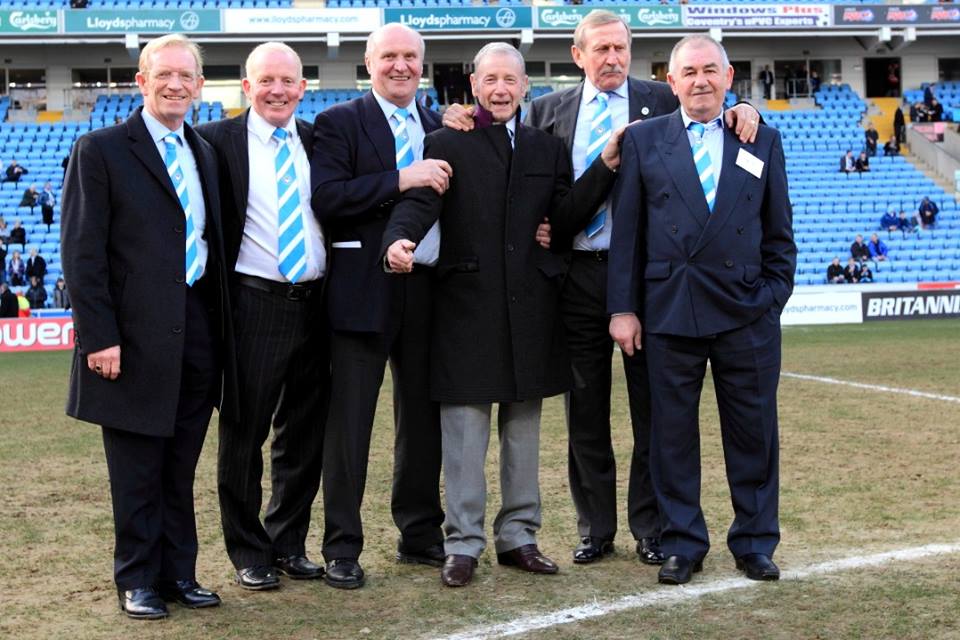
Jump forward over thirty years later and it’s a Scottish legends day at Coventry and again there is something not quite right. Starting from left to right, we have the ginger nutted Willie Carr, who gained six Scotland caps from 1970-72 and was unbeaten in all his games.
Next to Willie was a fellow ginger, Ian Wallace already mentioned in the above paragraphs. Then comes the man, whose record Steven Fletcher finally, finally laid to rest after 46 years when he scored a hat-trick. Yep, it’s Rangers legend Colin Stein who until Steven’s intervention was the last Scot to score a hat-trick. Colin played 21 times for Scotland scoring 10 goals, his last four caps were as a Coventry player.
And so we get to the non-Scot, Scot. It’s the late Gerry Baker who died in August 2013. If Gerry had been born a decade or so later, he would have been eligible to play for Scotland as both his parents were Scottish and indeed he spent most of his childhood living in Scotland. Gerry played for St. Mirren and indeed scored in their 1959 Scottish Cup Final triumph. He also played for Hibs, Ipswich and of course Coventry among others. The quirk of fate that saw Gerry born in the USA also allowed him late in his career to play in World Cup Qualifiers for the country of his birth as they attempted to reach the 1970 World Cup. Gerry’s brother was of course Joe Baker, who similarly due to family relocation to Liverpool for six months before returning to Lanarkshire to live was also not eligible for Scotland. However, Joe was such a goalscoring machine that he did play for England eight times, five of these were earned as a Hibs player.
Next to Gerry having a laugh is of course Tommy Hutchison. Is it possible that he’s laughing at Quinton ‘Cutty’ Young’s expense, as his name has been called out and no one can remember who he is? Quinton, only played for Coventry in 26 League games. Quinton had played for Ayr United before moving to Coventry in 1971 but by ’73 he was back up the road again to play for Rangers for a few seasons. Quinton was capped for the Under – 23’S on one occasion in 1971.
Lee Erwin’s move to Leeds last week reminded me of the relationship the Scotland team has had with Leeds in the past and maybe if things go well for Lee, the future too.
One of the surprising things about Scots being capped whilst playing for Leeds is that the first player to do so was Bobby Collins in 1965. When you think of all the players in the early years of football who practiced their craft down South it is strange that it took so long. Don Revie ironically a future England manager would bring about an era of success for Leeds and ultimately Scotland, which would see Leeds provide five players for the 1974 World Cup Squad. One of his first signings was Bobby Collins. Bobby had been previously capped for Scotland 28 times first as a Celtic and then Everton player and had last been capped in 1959. His return to the International scene came in the same year he won the Football writers Player of the Year, although he would only win 3 more caps, he played alongside fellow Leeds and Scotland legend Billy Bremner when he made his debut in the dark blue of Scotland on 8th May 1965. Scotland drew 0-0 with Spain at Hampden. Billy would go on to win 54 caps in total.
The next Leeds player to become involved was not a Revie signing and is perhaps the least known of the Leeds Scotland players at this time. Full back Willie Bell had been at Leeds since 1960 joining from Queens Park, he would play over two hundred times for his club but only twice for his country. He played against Portugal in 1-0 defeat and a 1-1 draw with Brazil in June 1966.
Eddie Gray, perhaps the most skilful player of Revie’s era first played for Scotland on May 10th, 1969, sadly Scotland got beat 4-1 by rivals England at Hampden that day. Eddie would only win 12 caps for Scotland, which is rather surprising given his talent, however competition for a place on the wing was always competitive with Jimmy Johnstone, Charlie Cooke and Tommy Hutchison latterly among the contenders. Eddie was voted the third greatest Leeds player of all time with Billy Bremner and John Charles in taking 1st and 2nd place respectively. Eddie would be left out of the Scotland squad for the 1974 World Cup.
In Scotland’s last game of the 1960’s Peter Lorimer made his International bow coming on as a sub in the second half in 2-0 defeat to Austria in Vienna. Peter was well renowned for his thunderbolt of a shot, as can be seen in the World Cup game against Zaire in 1974. Peter would play over 700 times for Leeds and 21 times for Scotland.
The final two players to make up the five for World Cup ’74 were Revie signings from Scottish clubs. Joe Jordan was bought from Morton for £15,000 in 1970 and would make his Scotland debut as a sub against England in May 19th, 1973, which we lost one nil. However, his fourth appearance in the blue of Scotland would be his most memorable, coming on for Kenny Dalglish at Hampden in September, 1973 to score the winning goal against Czechoslovakia to send us to the World Cup in 1974. Joe would win 52 caps altogether, scoring 11 goals along the way.
Gordon McQueen was a bargain buy from St. Mirren in 1972 for £30,000 made his Scotland debut against Belgium, on June 1st, 1974 a fortnight before our opening game on the World Cup. Scotland lost this World Cup warm up one 2-1. Gordon would win 30 caps in total.
By the time of the 1978 World Cup, Revie had left Leeds as had Jordan and McQueen to Manchester United, which meant there was no Leeds player in the squad for Argentina. Over the years there have been quite a few Leeds players representing Scotland including Frank Gray, Gordon Strachan, Gary McAllister and even in recent years Snodgrass, Bannan and McCormack but sadly the days of Leeds supplying the backbone of a Scotland squad have long gone.








 The Scotland Epistles Football Magazine