Search

The Scotland Epistles Football Magazine

Scotland Football Fanzine

Happy Birthday Brian Irvine

13239230_1746872612216776_767663965064940054_n

First posted on Facebook, May 24th, 2016

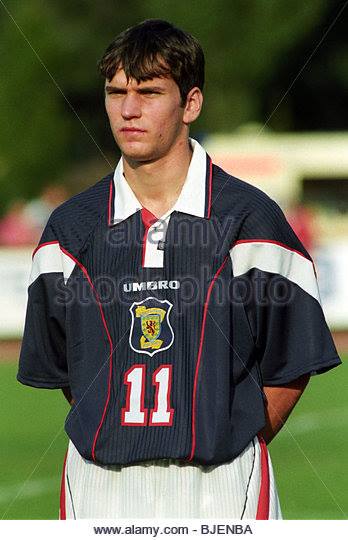
Happy Birthday to Brian Irvine. Former Aberdeen defender Brian will turn 51 today. Brian gained 9 caps from 1990 to 1994. The 1990’s saw the age of the Alex McLeish and Willie Miller as the main central pairing for Scotland come to an end and saw players like Dave McPherson, Craig Levein and Alan McLaren vie for that central position. It also saw Brian Irvine who had taken over in the Aberdeen defence following Miller’s retirement in 1990 stake his claim. Brian had started out at Brockville with Falkirk before moving to Aberdeen in 1985.
Brian would actually start in the first post-Italia ’90 game in front of a paltry crowd at Hampden of 12,800. Scotland took on Romania in their opening European Qualifier in September, 1990. John Robertson of Hearts was also starting his first game and in the 37th minute latched on to a McCoist knock down to equalise following an early goal from Romania. It would be McCoist who would score the winner in the 75th minute. Also making his debut that night would be Tom Boyd of Motherwell who would come on in the second half.
It would be quite a few more years ‘til Irvine was capped again with the likes of those mentioned above filling the role. It would be March ’93 before Brian was back in the team as he faced Germany in a friendly at Ibrox. The Germans would win 1-0 through a goal by Karl-Heinz Reidle. This is one the very few recorded friendly victories by Berti Vogts on Scottish soil unfortunately he was managing Germany at the time.
Brian would miss Scotland’s next game versus Portugal and after a dreadful defensive display in Lisbon, he was given his chance to make his mark. Brian would play seven games in a row slotting in alongside Colin Hendry who was making his debut in Tallinn, Estonia as the Scots won 3-0 with goals from Kevin Gallacher, John Collins and Scott Booth.
Brian would see out the rest of Scotland’s failed World Cup campaign; firstly with the home game against Estonia at Pittodrie which Scotland won 3-1 thanks to a rare Brian McClair goal and two from Pat Nevin.
Scotland then drew one each with Switzerland in September ’93, which also took place at Pittodrie and followed this up with a 3-1 defeat to World Cup ’94 Finalists Italy, in Rome. A final 2-0 win in Malta saw their campaign come to a close in November ’93, a game in which Craig Brown would take over as Manager following Andy Roxburgh’s resignation. Goals in Valetta would come from Billy McKinlay in his first Scotland game and Colin Hendry.

11649-zoom
Brain would play in two final games in April / May ’94 as the Scots first of all defeated Austria 2-1 in the Ernst Happel Stadium, Vienna with goals from debutante John McGinlay of Bolton and Billy McKinlay.
Brian’s final game would be against the Netherlands in Utrecht in which he was to score the Dutch third goal with a Duncan Shearer goal providing the only highlight on a night where the Scots were beaten 3-1.
And that was it for Brian. Brian would be diagnosed with multiple sclerosis the following year but would come back from this to continue playing with Aberdeen until 1997 where he would move on to Dundee and then finish playing with Ross County. As for Scotland, a few months after Brian was left out of the team Colin Calderwood would make his first appearance and begin his long partnership with Colin Hendry.
Happy Birthday Brian and all the best.

David Stuart
May 23rd.

13267978_1746130465624324_945447405116584115_n

First posted on Facebook on May 23rd, 2016

May 23rd, perhaps not the best day to be born if you’re hoping to have a successful Scotland career.
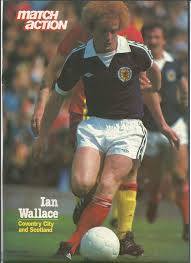
First up, Happy 60th birthday to Ian Wallace, he of the ginger frizz. Ian created quite stir down in England with Coventry City scoring goals quite freely after his move from Dumbarton. His first cap came under Ally MacLeod in February, 1978 against Bulgaria. Ian was brought on in the 55th minute for Kenny Dalglish with the game tied at one each. He would score the winner with five minutes remaining. Unfortunately for Ian, despite scoring that goal that would be all the game time he would get under MacLeod. World Cup ’78 came and went without him but Jock Stein would bring him back into the fold for Euro Qualifier against Portugal in Lisbon in November ’78. It would only be a mere cameo role as he was given the last twelve minutes coming on for Joe Jordan. Scotland were 1-0 behind at this time and that was how it would remain.
However, come April ’79 Jock would give Ian a starting berth down at Ninian Park, Cardiff. John Toshack of Wales would run riot with an inexperienced Scotland defence with new caps Alan Hansen, Paul Hegarty and George Burley all starting. Toshack scored three goals to give the Welsh a 3-0 victory, as for Ian he was substituted in the 55th minute with Jordan replacing him.
Ian was never capped again despite moving to Brian Clough’s Nottingham Forest a year later in a £1 million deal.

13254280_1746130492290988_7093019504326723383_n
Also, having a birthday today is Stephen Glass who will turn 40 today. Stephen started out his career with Aberdeen and was seen as a player with great potential. He would move to Newcastle at the start of the 1998-99 season for a fee of £650,000. Stephen would return to Pittodrie shortly after in October to make his debut for Scotland under Craig Brown. Stephen would come on, in the 79th minute against the Faroe Islands in a Euro Qualifier. Scotland won 2-1 with goals from Craig Burley and Billy Dodds but Stephen would never feature again for the National side. Things would not work out at Newcastle as his time was injury blighted, however he did have more success at Watford and indeed flourished at Easter Road on his return to Scotland in 2003. However, Stephen never made his way back into the Scotland side; so 11 minutes was all he would ever play. Happy 40th birthday Stephen.

13221467_1746130528957651_2020079658643593491_n
Happy 31st Birthday to Ross Wallace of Sheffield Wednesday who has become a bit of a forgotten man in terms of Scotland despite being a consistently good performer with likes of Sunderland, Preston North End and Burnley. It was during his time at Preston that he was capped by George Burley in what was to be his penultimate game in charge. Ross was given the first half against Japan in the Nissan Stadium, Yokohama before being replaced by Stephen Hughes of Norwich. Scotland would lose two late goals in the 2-0 defeat. Ross is currently part of the Sheffield Wednesday squad preparing for the Championship play-off final against Hull City and indeed scored two of their three goals in the play offs against Brighton to see them through to Wembley. Will WGS give Ross his chance at some point in the future or does the fact the Strachan didn’t fancy him when he was in charge of Celtic suggest he’s just not his type of player?
As if that was not enough, Scott Morrison who played for Aberdeen and Dunfermline around ten years ago and was capped 12 times at Under 21 level but never made it to the full side has a birthday today.
So will anyone born on this day ever make his way to a distinguished Scotland career?
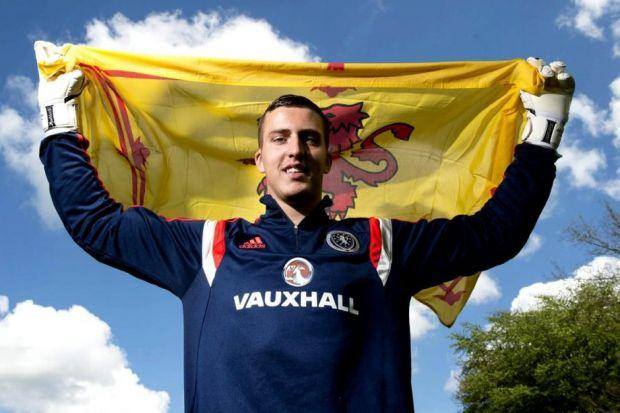
Who knows but Liverpool goalkeeper Ryan Fulton may finally be the guy to break that duck. Happy 20th birthday Ryan and all the best

13267952_1746130545624316_4420827567786587742_n

David Stuart

Happy Birthday Andy Weir

13239909_1744776599093044_5218577210272502580_n

First posted on Facebook, May 21st, 2016

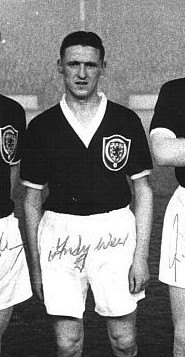
Happy Birthday to ex-Motherwell winger Andy Weir who will turn 79 today. Andy was capped six times by Scotland in a 13 month period from May ’59 to June 1960. His Scotland career couldn’t have got off to a better start as he scored within 6 minutes in his first game. Actually, it could have been better as John White of Falkirk had started his debut that day and scored in the first minute. Uwe Seeler would score for West Germany in the 14th minute before Graham Leggat hit Scotland’s 3rd in 23 minutes and Juskowiak would round off the scoring in the 36th minute. 103,415 had turned up for this friendly and surely would have enjoyed this one. Ian St. John and Bert McCann both also with Motherwell were given their first caps that day too.
Andy wouldn’t play again until April 1960 with Bertie Auld of Celtic replacing him in the side in between. He lined up against England at Hampden in a game that ended 1-1 with Fulham’s Graham Leggat providing the Scots goal.
A friendly against Poland at Hampden followed but Scotland never really have had much luck against the Poles at home, as I’m sure we all know and this game was no different. Although Denis Law and Ian St. John would both score in the first half, the Poles would hit three in reply.
Scotland then went on a small tour of Europe in which Andy would play all three games. Denis Law and Ian St. John would only feature in the first game. The first stop was at the Prater Stadion, Vienna where Scotland were given a bit of a doing with the Austrians scoring four and a lone Dave Mackay hitting a consolation goal.
Better fortune followed in the next game as Scotland drew 3-3 with Hungary at the Nep Stadion, Budapest. Willie Hunter of Motherwell would hit Scotland’s first goal in what was his debut for the team. George Herd of Clyde and Alex Young of Hearts would complete the scoring.
Andy’s final game would take place in the 19 Mayis Stadyum in Ankara in June 1960 and to date, this is still the only time Scotland have ever played Turkey in a full international. Scotland would lose 4-2 with goals from an Eric Caldow penalty and another Alex Young goal.
After this, Davie Wilson of Rangers slotted into the left wing position and would retain it for a number of years. Andy would play over 200 times for Motherwell and would retire from the game in 1968.
Happy Birthday Andy and all the best.

David Stuart

2016 EUROPA LEAGUE FINAL PROGRAMME – SCOTTISH CONNECTIONS.

$_35

First posted on Facebook May 18th, 2016

As a collector of big-match programmes I always search through the publication looking for Scottish connections – anything that puts Scotland in a positive light and doesn’t say that the game in this country is shit in spite of what our co-efficient screams. Over the years there has been the all too occasional joy of seeing the name of a Scottish club on the front cover of programmes for European Finals however for this season’s Europa League Final I have to make do with the names Liverpool and Seville. No matter for there are some Scot-tastic photos and stats inside.

Of course the section on Liverpool includes an article on Bill Shankly [possibly the best Manager Scotland never had] who – with the onfield assistance of Peter Cormack – steered the Merseyside club to their first-ever European trophy in 1973 – the UEFA Cup.[Gary McAllister of course helped the Reds win it for a third time in 2001]. However it was the top-twenty list of players with the most appearances in the UEFA Cup/Europa League which caught my eye as it includes no less than three Scottish Internationalists who all strutted their stuff at Dundee United.

David Narey is sixth on the list with 63 appearances [35 caps – 1 spectacular feckin goal against Brazil!]. Eamonn Bannon is 14th equal with 57 appearances [11 caps and one goal against the German Democratic Republic] and then in 16th equal place is Paul Hegarty with 56 appearances [8 caps].

Celtic also rate a mention in an article which looks at ‘some of the more exotically named clubs in European football’ whilst their talisman striker Henrik Larsson still tops the tournament’s leading goalscorer list with 31 goals overall. Meanwhile, an all-time Europa League/UEFA Cup XI includes our old friend Berti Vogts at Right-back and SuperScot John Wark in midfield where he has Dino Baggio and Jose Antonio Reyes for company.

As for the 2016 final, well maybe it is about time that Liverpool starting signing Scottish players again….

Robert Marshall

Adieu to East Stirlingshire

278px-East_Stirlingshire_FC_logo.svg

East Stirling or to give them their full name East Stirlingshire were demoted from the SPFL on Saturday after losing in a play-off to Lowland League team Edinburgh City.
In terms of Scotland, well you won’t be surprised but not too many East Stirling players were capped for Scotland and they all came in the 19th Century. David Alexander was the clubs most capped Scotland player with two.
First up was Archibald Ritchie in March, 1891. (I wonder if he was actually an Archie). Archie played at right back against Wales at the Racecourse Ground as Scotland won 4-3 with R.Boyd of Mossend Swifts grabbing a double. Other clubs to be represented that day were Partick Thistle, Alloa Athletic, Leith Athletic, St. Mirren, Queens Park (x2), Abercorn, Ayr United and Montrose.
David Alexander was first capped against Wales in 24th March, 1894 (and Hamish Husband don’t dare claim to have been there!) against Wales at Rugby Park, Kilmarnock. Scotland won 5-2 with Alexander contributing a goal. Also, in the team that day and captain of the side was James Kelly of Celtic who would go on to become a director at Celtic Park as would some of his descendants.
A week later and Alexander played in a 2-1 win over Ireland at the wonderfully named Solitude Ground, Belfast. Captaining the side that day was Robert Marshall of Rangers and also playing was . . . and I’m not making this up David Stewart of Queens Park. Okay different spelling but spooky nonetheless. Yes, your Scotland Epistle Stalwarts also played for Scotland.
March, 1898 would see the last player from East Stirling represent Scotland; James McKie. Scotland beat Wales 5-2 at Fir Park with McKie hitting a double and yet he would not play again for Scotland. If you think that’s bad; James Gillespie of Third Lanark hit the other three goals in his only game for Scotland. Gillespie had by this time already won the English Championship with Sunderland twice and indeed won the World Championship in 1895 with them too. Basically, the English champions beat Hearts the Scottish champions, apparently at the time, Argentina was the only other country in the World with League football. Sunderland beat Hearts 5-3 at Tynecastle with a team that consisted of 11 Scottish players.
Anyway I digress this is meant to be about East Stirling. I haven’t come across a good list of former East Stirling players that went on to play for Scotland and so I only have a note of two. If you know of others let us know. The great Eddie McCreadie of Chelsea fame and Everton goalkeeper George Woods both started at East Stirling. Eddie won 23 caps in the mid to late 60’s and George was one of few goalkeepers given the chance to oust Alan Rough in the early 80’s. George won four caps for Scotland and was part of the 1982 World Cup Squad.


Of course, East Stirling does have another more famous connection to Scotland as it would be the team that gave Sir Alex Ferguson his first managerial post in football and as we know he too would manage Scotland after the death of Jock Stein.
So all the best to East Stirling in the future and our congratulations to Edinburgh City, even though the possibility of cold winter nights sitting in that stand at Meadowbank fills me more with dread than joy as there were far too many Partick Thistle defeats there in the 1980’s.

David Stuart

Sportsworld Magazine

Scan0007

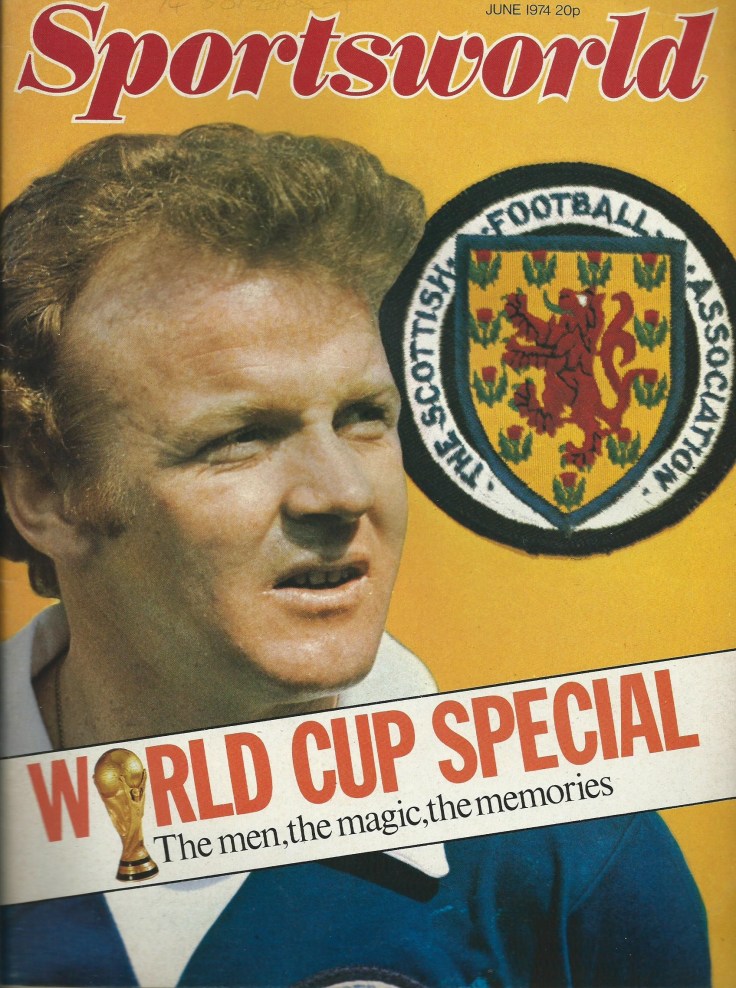
Bought another magazine for our Magazine cover collection on the website. This time it’s Sportsworld from June 1974. Sadly, there’s a not a plethora of great Scotland photos within it. There is an interview with Bob Wilson, Ron Greenwood and Derek Dougan on the World Cup and Scotland’s chances. It is kind of funny that we think of this team being full of great players whilst the panel felt that’s what the team lacked. Interestingly, Greenwood who would go on to manage England suggests that Billy Bremner never plays as well for Scotland as he does for Leeds. However, both Dougan and Greenwood plump for Brazil and Scotland to progress from our group whilst Wilson calls it right saying Yugoslavia will top the group with Brazil coming second.
There’s also an article from Hugh McIlvanney potting Scotland’s World Cup history but once more suggesting that the team wasn’t good enough and harking back to the generation before i.e. a young Law, Jim Baxter, John White etc were so much better. Not the greatest of mags as there is some articles on Cricket, Marathon running etc. but quite a good cover though

SCOTLAND – EUROPEAN AND WORLD CHAMPIONS

13221641_1743286839242020_6173924138007116575_n

First posted on Facebook May 17th, 2016

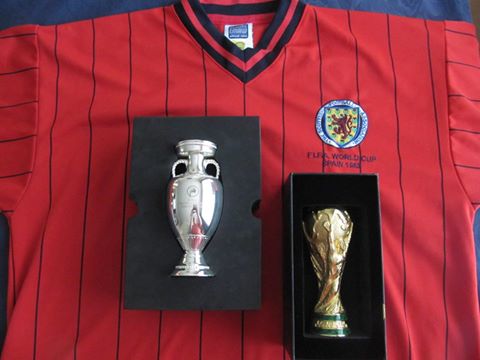
Two years ago, as an early retirement gift, I received a small replica of the FIFA World Cup trophy. Of course, if I had been really popular with my ex-colleagues they would also have a arranged for an open-top bus procession from Cambuslang to Hampden Park that would enabled me to display my trophy to the cheering crowds or bemused shoppers. We’ll leave to the side the fact that my trophy is but a miniature version of the real thing. Anyway, as I’m still pissed with UEFA for not offering Scotland a wild card entry to the 2016 Euros I thought ‘feck it’ – I’ll ‘replicate’ the feats of West Germany , France and Spain by having [and displaying] TWO major international football trophies at the same time.

And how did I justify this acquisition of a mini Henri Delaunay trophy to myself? Well my first-ever Scotland match was a Euro Championship qualifier against Eusebio’s Portugal at Hampden Park in October 1971 and over the years I have spent a fair bit of time and money on Scotland’s, to date unsuccessful pursuit of the real version. So why not ‘reward’ myself with a memento of something that, over the years, has regularly eaten away at my cash as well as my soul. Of course, that goes for the World Cup as well.

Anyway it was cheaper than most of the wife’s shiny trinkets and again it is only about six inches tall, but size isn’t important – right, gentlemen? I was however, a bit disappointed that the trophy did not come with a Certificate of Authenticity. After blowing sixty quid on a metallic knick-knack surely I should be certified?

The important thing however is that Scotland now has no less than two international Holy Grails – or at least a delusional Scotland supporter from Cambuslang has two mini-replicas. Maybe this is where I finally draw the line with my football memorabilia collection – unless someone can tell me where I can get hold of a replica British Home Internationals Championship trophy, the Kirin Cup and the Rous Cup, as I [on Scotland’s behalf] go in search of football’s equivalent of Marvel Comics’ Five Infinity Gems! You know, maybe I should cut back on the afternoon drinking……

Robert Marshall

(As per Robert’s request Billy Mackie sent a couple of photos of his miniature Kirin Cup engraved with the results from 2006)

Happy Birthday to Eric Caldow

download (2)

First posted on Facebook, May 14th, 2016

Eric Caldow will turn 82 today. For a lot of us the moment we hear the name Eric Caldow we think of his broken leg in the game against England, suffered early into the game in April, 1963 and how Scotland went on to beat England with ten men; thanks to goals by Jim Baxter.
However, the real story of Eric is really about a player who was known as ‘Mr. Consistent’ rarely missing games, in fact he was capped 40 times for Scotland, from April 1957 to April 1963 and only missed two games in that period.
His Scotland career started where it finished; at Wembley Stadium in April ’57. After winning the League with Rangers for two seasons in a row Eric was brought into the Scotland set-up replacing Falkirk’s Alex Parker at right back. Eric was only player making his debut in a team full of tried and tested players such as George Young and Ian McColl of Rangers. McColl would go to manage Scotland as would Tommy Docherty who was also in the line-up that day. Lawrie Reilly of Hibs, Willie Fernie and Bobby Collins of Celtic also featured.
Scotland got off to a good start with Off the Ball favourite Tommy Ring scoring after a minute but goals by Derek Kevan and then Duncan Edwards gave England the victory. Edwards was of course, one of Busby’s Babes and would be a victim of the Munich Air Disaster in February 1958.
Better times were to follow for Caldow and Scotland as they competed in two World Cup matches in early May. First up was a 4-2 victory over Spain at Hampden with Jackie Mudie of Blackpool hitting what is probably Scotland’s most vital hat-trick ever and a penalty from Eric’s full back partner John Hewie of Charlton Athletic. Then over a week later on May 19th Scotland played Switzerland in Basle coming away with a 2-1 win Mudie once more on the score sheet. Jackie would only play 17 times for Scotland but has a goal tally of 9 which is a very healthy return.
A friendly against West Germany in Stuttgart followed three days later which the Scots won 3-1 with Bobby Collins hitting a double and Mudie the other.
There’s no way in the modern era Scotland would have such a hectic schedule as four days later they played Spain in the Bernabeu and were crushed 4-1 with the great Gordon Smith scoring the Scots consolation goal. The advantage however, was still with the Scots as the Spanish had opened their campaign with a 2-2 draw with the Swiss. The combined attendances for Eric’s first five games for Scotland equals a staggering 404,410.
Scotland played Switzerland in November, 1957 and a meagre 58,811 turned up to see Scotland beat the Swiss 3-2. There must have been a few nervous folk around when after goals from Archie Robertson of Clyde, Mudie and Alex Scott of Rangers; Vonlanthen of Switzerland scored to make it 3-2 with ten minutes remaining. Interestingly Caldow had switched from right back to left to accommodate Alex Parker’s return to the team as he would do on a few occasions.
Eric would play in all three games of the 1958 World Cup as Scotland opened with 1-1 draw with Yugoslavia and followed it with a 3-2 defeat to Paraguay and lost in their final game to France 2-1 with two giants of French football scoring in in the game; Just Fontaine would score a total of 13 goals in six games in the World Cup and still holds that record for any one tournament. The other scorer was Raymond Kopa who would be an integral part in the early days of Real Madrid’s European dominance.
After the World Cup, Scotland would start to produce some great young talent such as Denis Law, John White and Ian St. John, however Eric would retain his place and won his 22nd cap back at Wembley once more in April, 1960. Scotland drew 1-1 that day with Frank Haffey of Celtic making his first of two Scotland appearances. Alex Young then of Hearts would make debut that day too. Graham Leggat would score an early first half goal for Scotland with Bobby Charlton hitting the equaliser from the spot in the second half.
Eric would score four goals for Scotland all from the penalty spot and the first would come in the city of Ankara as Scotland played Turkey in June 1960, for the one and only time in their history thus far. Scotland lost 4-2 and not only is Caldow one of only eleven Scots to face Turkey; he is one of only two Scots to score against Turkey as well; Alex Young being the other.
The following October and Eric was named as captain of the side for the first time; an honour he hold fifteen times in total and all in consecutive games. The first three games of that series were in the 1960-61 Home International series where Scotland would be involved in games that would see an accumulation of 21 goals. Sadly Scotland would lose 13 of these following a 2-0 defeat to Wales, a 5-2 victory over the Irish with Eric contributing a converted penalty and finally a 9-3 crushing by England at Wembley.
World Cup action would return in May ’61 and begin with home and away wins against the Republic of Ireland; winning 4-1 at Hampden and 3-0 at Dalymount Park, Dublin. However, success came to a grinding halt in Bratislava as Czechoslovakia put 4 past Lawrence Leslie in goals without reply. However, parity was resumed in September as Scotland won 3-2 with Denis Law striking the winner with seven minutes remaining.
Scotland were successful in the first two games of the ’61-’62 British Championships recording a 6-1 away win v Northern Ireland followed by a 2-0 win over Wales in the winter of ’61. It was traditional at this time that the first two games of the Home Internationals were always played in October, November and the game against the Auld Enemy in the spring of the following year.
However, late November ’61 would see Scotland compete in a World Cup play-off against the Czechs in Brussels. A depleted Scotland side would eventually lose out in extra time goals as the Czechs who ran out 4-2 winners. The Czechs would go on to contest the World Cup Final losing 3-1 to Brazil in Santiago, Chile.
However, come the spring of ’62 Scotland would win the British Championship outright with their first victory over England at Hampden since before the Second World War. Scotland won 2-0 with Davie Wilson of Rangers hitting the opener in 13 minutes. The home fans would have to wait ‘til the 88th minute and Eric scoring a penalty before they could truly celebrate. It had been a long time coming.
The latter half of the year would see Scotland score victories over both Wales (3-2 with Eric scoring once more from the spot) and Northern Ireland (5-1) before heading to Wembley and destiny.
Fate would not be kind to Eric in April ’63 as he would have his leg broken in three different places following a tackle by Bobby Smith of England early in the game; however it would cement the reputation of his fellow Ger; as Jim Baxter scored both goals that day including a penalty to give Scotland an unlikely victory with ten men.
Eric would take a while to recover and would make his way back into the Rangers team but by all accounts was never the same player and indeed never regained his place in the Scotland team. His forty caps must be the equivalent of over 60 nowadays and indeed it’s sad to think his final cap came at the age of 28.
Happy Birthday to Eric, one of the grand old men of Scottish football and all the best to you.

David Stuart

Derek Parlane and the Monty Gum Scam

Scan0018

Scan0005 (4)

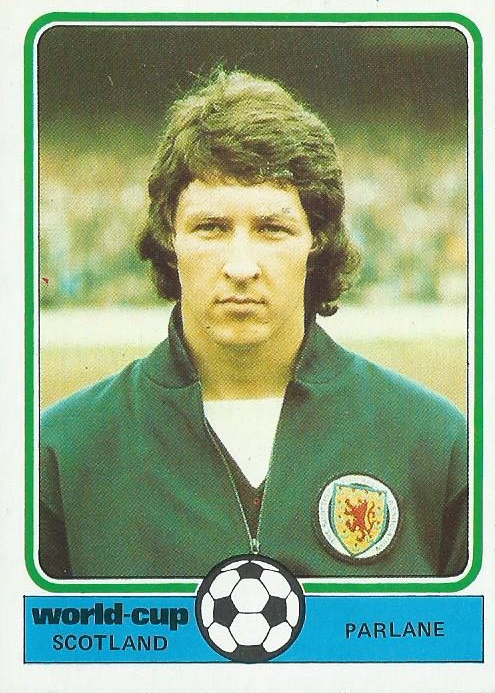
Dutch company Monty Gum really were the cheapest of the cheap. Here are two of their cards; one is for the 1978 World Cup and the other for 1982. I can almost forgive them for including Derek Parlane in the 1978 set. He did play under Ally MacLeod; once in May ’77 but come on that was his last cap and come the 1982 set the halved the size but kept the same players. Incidentally, Derek made quite a few sticker and card sets for the 1974 World Cup.

David Stuart

Blog at WordPress.com.

Up ↑